Sunday, December 19, 2021

Learning gaps in Australia remain shockingly large - Jordana hunter


Here is a tweet I read this morning by Jordana Hunter who does not know what she is writing about. And she is the education program director at the Grattan Institute.

Jordana Hunter @hunter_jordana

Learning gaps in Australia remain shockingly large. NAPLAN shows a 5-year gap in reading and a 4-year gap in numeracy by Year 9, depending on whether students' parents have university degrees or didn't finish high school.

@GrattanInst @EmslieOwain

Friday, December 17, 2021

Phonemic awareness and how children learn to read


Here are extract from an article found here and my comments. This is a continuation of my post yesterday.


A lack of phonemic proficiency is viewed as a reason for word-reading difficulties (e.g., Kilpatrick, 2019a, b, 2020). Hence, it is assumed that stronger and weaker word readers can be better differentiated by assessments that involve more advanced phonemic manipulation tasks (phoneme deletion or replacement), compared to measures that are viewed as more “basic” such as phoneme segmenting or blending.


Thursday, December 16, 2021

Tweets by David Kearns on phonemic awareness


Yesterday, 15.12.2021 I read the following tweet by Devin Kearns @devin kearns

#phonemic awareness has been a hot topic b/c of debates about whether students need "advanced" PA and whether PA teaching should use letters. @DrNathanClemens led a group of us @emilyjsolari

 @burnsmk1 @FumikoHoeft @NancyNelsonFien @KimStMartin  to address these important topics.

as with all things, there are not totally clear answers, but ... data and theory do not appear to support the idea that advanced PA is necessary for the development of strong word-recognition skills nor that PA instruction should be entirely done without reference to print.

Authors on the paper are Hank Fien, @NCILiteracy director, and @UConnNeag doctoral fellow Melissa Stalega.

I then tweeted as follows:

Wednesday, December 15, 2021

Professor James Chapman &Tunmer vs Professor Stuart Mc.Naughton


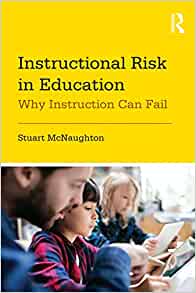
Yesterday, I read the following report by Professor James Chapman of Massey University complaining about Professor Stuart McNaughton of Auckland University.


This report which reminded me of the saying ‘Pot calling the kettle black’ written on 2.9.2020 is more recent than the report I posted yesterday. 


Here are some extracts and my comments:


James Chapman and William Tunmer (JC&WT)


The Education Science Advisor (ESA) to the Ministry of Education, Professor Stuart McNaughton, authored The Literacy Landscape in Aotearoa New Zealand. McNaughton framed his report with a key question: "What are the most reasonable explanations for our problems in excellence and equity in literacy? Specifically, what are the plausible hypotheses for: (a) the overall drop in literacy achievement in successive cycles of international assessments; and (b) the limited impact on changing the distributions of achievement for Māori and Pasifika students and those from low socioeconomic status (SES) communities?"

Tuesday, December 14, 2021

A research report by Prof. James Chapman and William Tunmer.


The following are extracts of a research report by Prof. James Chapman and Prof. William Tunmer in 2019 and my comments. I was sent this as an attachment in an email from James Chapman a week ago, on 6.12.2021.

Chapman and Tunmer are researchers attached to Massey University 


The wealth of scientific evidence does not support the view that dyslexia is present at birth, that it can involve numeracy and musical notation, and that the skills may not “match up to an individual’s other cognitive abilities” (Elliott & Grigorenko, 2014).

The U.S.-based International Dyslexia Association (IDA) has retained the term dyslexia:

Dyslexia is a specific learning disability that is neurobiological in origin. It is characterized by difficulties with accurate and/or fluent word recognition and by poor spelling and decoding abilities. These difficulties typically result from a deficit in the phonological component of language that is often unexpected in relation to other cognitive abilities and the provision of effective classroom instruction. (IDA; retrieved from http://eida.org/definition-of-dyslexia/ )

Monday, December 13, 2021

Reading Reform Foundation and Dr. Marlynne Grant (Part 2)


Here are extracts of the response by Dr. Marlynne to British Dyslexia Association and my comments.

Marlynne:

There are longitudinal studies of 11 years, with about 700 children, which demonstrate that dyslexia does not develop when children begin with a good SSP programme and when children who fall behind are identified early and given extra practice and teaching with SSP in order to keep up. Not a single child in these studies developed severe literacy difficulties. (See Grant, M (2014)

My comment:

Sunday, December 12, 2021

Orthographic Mapping by Stephen Parker (Part 3 of 3)


                                                                   ANGLOSPHERE


Stephen Parker:

The limiting factor on reading comprehension for most children in the initial two years of instruction is not language comprehension, it’s their inability to quickly recognize the words on the page. This can only be remedied by explicit and skilled instruction involving the distal factors that directly impact word recognition, that is, letter-sound correspondences, decoding, and the phonemic awareness skill of blending. As children begin to master these distal factors, the orthographic mapping that enables automatic sight word creation gets underway.

Friday, December 10, 2021

Dr. Marlynne Grant and Reading Reform Foundation of UK.


Yesterday, 9.12.21, I read a tweet by Reading Reform Foundation of UK as follows:

@RRForg

The British Dyslexia Association (BDA) is challenging the Department for Education's promotion of Systematic Synthetic Phonics (SSP) - the technical code knowledge and skills for word recognition of the Simple View of Reading. Dr Marlynne Grant responds: http://rrf.org.uk/2021/12/08/res


Wednesday, December 8, 2021

Orthographic Mapping by Stephen Parker (Part 2)


The extracts below are from the post by Stephen Parker found here.


“We take no position on whether there are one or more ultimate causes of dyslexia. But we suggest that there is a common denominator in every case of dyslexia… an inability to decode. This is not to say that we claim to have identified the ultimate cause of dyslexia; for this, one would have to push the question one step back and ask why they cannot decode.”  [12] (Gough, P. B., & Tunmer, W. E. (1986).)

Monday, December 6, 2021

Orthographic Mapping by Stephen Parker (Part 1)


Here are extracts of an article by Stephen Parker and my comments. You may read the article here.

I have decided to break this up into bite sized posts.

Stephen Parker:

Orthographic mapping is the connection-making process that automatically creates sight words – words that are simply recognized at a glance, with decoding no longer necessary.

The connections that need to be made, according to Ehri, are between the letters seen in a word’s spelling and the sounds (phonemes) heard in that word’s pronunciation. This is precisely what decoding (sounding out) a word accomplishes. For most students, decoding a word successfully 2-5 times creates a new sight word.

Wednesday, December 1, 2021

Why insist on research reports for everything?


I read a well written blog post by Lindsay Kemeny. Here are extracts and my comments on the article. (LINK)


I have always tried to be careful with how I bring this up, because people get so upset and defensive when confronted with the fact that there is no research to support these reading strategies and, even worse, they are doing harm to students. But my patience is wearing thin on this topic. Just when I think that the tide is turning and that the majority of educators now realize the problems surrounding 3 cueing, I hear an edu-celebrity tell teachers on Facebook to simply “tweak” the strategies instead of get rid of them or a reader emails me asking me to take down this post stating that it’s only my opinion and that 3 cueing works. This particular reader told me not to throw the baby out with the bathwater, but 3 cueing is exactly what needs to be thrown out. I stand by what I said. There is no research to support these strategies and you don’t need to take my word for it. You can read about it here, here, and here.


Tuesday, November 30, 2021

Lyn Stone and orthographic mapping


Lyn Stone had blocked me for commenting on her tweet. Only recently have I seen her tweets again. Here is one such tweet I read yesterday and believe she does not know what she is talking about other than quoting what someone had said about 20 years ago.

Here is the URL to Lyn’s video clip and my comments.

https://youtu.be/KIuwKnZqJEQ

Monday, November 29, 2021

Jo Anne Gross and other blockers


Too many so-called educators on social media block me. They block me to prevent truth being known by others. They misrepresent to promote their products.

Jo Anne Gross was one of the first to block me. She blocked me on LinkedIn when I wrote that phonological awareness deficit is not the cause of dyslexia. In 2010, I also started promoting my Free of charge lessons on my blog for parents of kids unable to read. If teachers and parents know why kids are disengaging from learning to read, then Jo Anne Gross as an intervention business owner, may lose business.

Saturday, November 27, 2021

Labels like ADHD and Dyslexia can interfere - Dr. Richard Selznick


Following my post on the response to a question on Twitter I received the following email from Dr. Richard Selznick.


I looked back on some of your other blog posts about Phonemic Awareness and related topics.

Thursday, November 25, 2021

Building knowledge from the ground up


I read the post found here by a psychology teacher, Paul Cline, who writes on ‘thoughts on teaching and learning, and teaching psychology.


What is in the article is what I have been harping on for a decade. I have said that I learned from the experts - my 'dyslexic' students -that they had disengaged from learning to read due to confusion. They could not scaffold new learning to what they had already learned earlier. They could not blend because sounds of consonants were taught with extraneous sounds.