
Pamela Snow once said I was “focusing too narrowly.”
Dr Karen Faulds suggested phonics may not foster a love of reading.
Both miss the point.
Claude Bernard put it cleanly: “It is what we think we know already that often prevents us from learning.”
Pamela Snow once said I was “focusing too narrowly.”
Dr Karen Faulds suggested phonics may not foster a love of reading.
Both miss the point.
Claude Bernard put it cleanly: “It is what we think we know already that often prevents us from learning.”

Why extraneous sounds shut down curious kids
If a runner is limping, the first thing I would do is check whether a thorn is stuck under his foot. Pulling out that thorn comes before looking for deeper medical explanations. In the same way, when children disengage from learning to read, the first step is to examine the most immediate source of confusion: the way consonant sounds are taught. Even Sue Lloyd, author of Jolly Phonics, agrees that “saying the sounds as purely as possible is important.” That acknowledgment matters, because teaching letters with extraneous sounds—“buh” for /b/, “duh” for /d/—is not a trivial detail. It is the thorn that causes many otherwise curious children to shut down. To dismiss this as a “narrow focus,” as Pamela Snow has suggested, is unacceptable. Until we remove that thorn, no amount of broader theorizing will help children walk, let alone run, toward literacy.

It's Often the Teaching, Not the Child
In 2010, my mentor, Dr. Richard Selznick, shared a profound insight that has stuck with me ever since: most children on the left side of the bell curve aren't truly "disabled" in the clinical sense. Instead, they are often "teaching disabled" or "curriculum disabled." These kids thrive when given structured, explicit instruction with ample practice and immediate feedback. True dyslexia—where a child struggles profoundly even with the best teaching—is far rarer.

In Part 2, I explained that clarity in instruction—the correct sounds of letters, taught step by step—is the Grail. It prevents confusion and keeps children from shutting down. But even with clarity, some children still struggle. Why?
Because the human mind is like the human egg. Once an idea has entered, it is difficult for a new one to penetrate. This is especially true for curious, intelligent children. They absorb early input eagerly, and when that input is wrong, it embeds itself deeply. Later correction often bounces off. These are the very children who shut down—not because they lack ability, but because their early learning was contaminated.

Prof. Paul L. Thomas (@plthomasEdD) of Furman University has long been a voice in the education wilderness—pushing back against the hype of "science of reading" mandates, defending balanced literacy, and calling out phonics zealots for oversimplifying complex kids. As a high school English teacher turned professor, his blog Radical Scholarship and tweets cut through the noise with data-driven skepticism. I've cited him approvingly in my own fights against PAD dogma and "cuh-ah-tuh" blunders. But when it comes to my core question—how do multilingual kids (and even fluent adults) nail nonsense words like "scrab" or "thake" despite kindergarten phonics gone haywire? —he's been radio silent. Or worse: a mute button.

Different Perspectives: Tweets That Sparked the Debate
Good evening, readers. The dyslexia debate often ignites on Twitter (now X) and simmers unresolved for years — tonight, we revisit one such firestorm.
Our spotlight falls on Pam Kastner (@liv2learn), a vocal advocate for the Science of Reading (SOR) and phonics-first instruction. With over 16,000 followers and roles at Mount Saint Joseph University and The Reading League PA, she's a force in pushing evidence-based literacy. But our paths crossed in heated 2020 exchanges that highlight the chasm between phonics purists and those of us advocating for innate decoding potential.

For many years now I have said that many intelligent kids disengage from learning to read due to teachers/schools teaching the wrong sounds represented by letters.
The obvious questions to ask me, which have never been asked, are:
i. Why are there kids unable to read in schools teaching systematic synthetic phonics like the school in which Sue Lloyd is teaching?
ii. How are a majority of kids who are taught sounds represented by letters wrongly, that is teaching letters with extraneous sounds, able to read?

Here is the article referred to in Karen Vaite’s tweet.
The following are extracts from the article.
It takes time—grapheme by grapheme from left to right; Dehaene says, “Beginners need to be told how it works.” Here's an example. Effortful analysis of a word such as rat, along with active engagement and feedback from the teacher, might require the first grader’s teacher to employ modeling and prompts in word study lessons,
Teacher: “Today, we will be learning and listening to our new words for this week. Listen to all the sounds, and then you say the word after me. Ready? The first word is rat. Rrraaat. Rat.”
Yes, this is how I teach my students. Listen to how my son pronounces the sounds of the letters in the first lesson found here.
My question to all the educators is why many kids in classes teaching sounds of letters without extraneous sounds as illustrated by Dehaene, Sue Lloyd and Stephen Parker still end up with kids being unable to read like the majority?

This morning I read a Tweet by Karen Vaites which had a link to the article here.
Here are some excerpts from the article and my thoughts.
“How Learning to Read Changes the Brain”.
Yes, brain imaging will show a difference in the brain before and after a child learns to read. But it does not show how the brain learns to read. No one has discovered how the brain learns to read.

I have always found it easy to say sorry when I have made a mistake and move on. Once I say sorry the matter will not be dwelt on.
Here is a recent example of a mistake I made on Twitter and when was informed by an education consultant, Peter Blenkinsop, I apologised and moved on.
I learned quite a bit from Elizabeth Brown on a long Twitter discourse. Here are somethings she tweeted and my comments:
Elizabeth Brown @PhonicsMom Replying to @luqmanmichel @ReadSimplified and 2 others
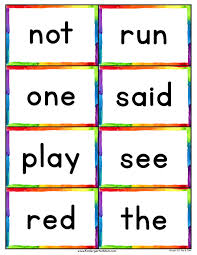
With 100% whole word methods, they used flashcards for everything. Now with balanced literacy, the predictable readers are used for new words, but they also send home hundreds of high frequency sight words to be memorized with flash cards.

Here are extracts of the response by Dr. Marlynne to British Dyslexia Association and my comments.
Marlynne:
There are longitudinal studies of 11 years, with about 700 children, which demonstrate that dyslexia does not develop when children begin with a good SSP programme and when children who fall behind are identified early and given extra practice and teaching with SSP in order to keep up. Not a single child in these studies developed severe literacy difficulties. (See Grant, M (2014)
My comment:
Yesterday, 9.12.21, I read a tweet by Reading Reform Foundation of UK as follows:
@RRForg
The British Dyslexia Association (BDA) is challenging the Department for Education's promotion of Systematic Synthetic Phonics (SSP) - the technical code knowledge and skills for word recognition of the Simple View of Reading. Dr Marlynne Grant responds: http://rrf.org.uk/2021/12/08/res

Lyn Stone had blocked me for commenting on her tweet. Only recently have I seen her tweets again. Here is one such tweet I read yesterday and believe she does not know what she is talking about other than quoting what someone had said about 20 years ago.
Here is the URL to Lyn’s video clip and my comments.

The following are extracts from a blog post found here.
Every word has three forms – its sounds (phonemes), its orthography (spelling), and its meaning. Orthographic mapping is the process that all successful readers use to become fluent readers. Through orthographic mapping, students use the oral language processing part of their brain to map (connect) the sounds of words they already know (the phonemes) to the letters in a word (the spellings). They then permanently store the connected sounds and letters of words (along with their meaning) as instantly recognizable words, described as “sight vocabulary” or “sight words”. (Internet)
With orthographic mapping of a word, the letters we see with our eyes and the sounds we hear in that word get processed together as a sight word and are stored together in the brain. This is not the same as memorizing just the way a word looks. It is also important to remember that orthographic mapping is a mental process used to store and remember words. It is not a skill, teaching technique, or activity you can do with students (Kilpatrick, 2019). What can be taught are phonemic awareness and phonics skills which enable orthographic mapping.

Yesterday, 27.10.2020, I had a fruitful discussion on Twitter with nickie simonetti @ End the Struggle#Dyslexia.
In brief I said at the end of the discussion:
My discussions on Twitter is not to 'fix' but to make teachers aware that we can reduce kids leaving school as illiterate simply by not teaching the wrong pronunciation of phonemes of consonants. Prevent rather than cure.
nickie simonetti @ End the Struggle#Dyslexia responded:
Agree...whenever I watch an instructional video I shudder.

Yesterday Sue Lloyd, an expert in teaching phonics, tweeted the following:
In my experience the cause of reading problems is nearly always when children are expected to memorise words instead of decoding them.
This post is in response to her tweet.

‘Preschool and child care have little impact on a child’s later school test scores’.
The above was tweeted by Greg Ashman.

Here is another video clip in this post where the phonemes represented by letters are read wrongly and yet the university student in Australia is able to read the nonsense words easily.
Is she reading using SSP or by analyses?


