Showing posts with label Pam Kastner. Show all posts

Tuesday, November 11, 2025

Evening News: Narelle Lynch and the Transferability Tango – Context Over Code in Australia's Literacy Waltz


Different Perspectives: Tweets That Echo Across Continents


Good evening, readers. The reading wars don’t respect borders — they leap from U.S. threads to Aussie classrooms faster than a kangaroo on caffeine.


Tonight’s dispatch takes us Down Under to Narelle Lynch, a 19-year veteran teacher from Australia whose tweets on phonics pitfalls and the power of context have fueled fierce exchanges since 2020. Trained by the THRASS Institute — a multi-sensory literacy framework blending phonics, morphology, and more — Narelle champions a holistic approach: grammar, syntax, etymology, and real-world transferability over isolated sound drills.

Thursday, November 6, 2025

Evening News: Pam Kastner and the Phonics Firestorm – A Decade of Unanswered Questions


Different Perspectives: Tweets That Sparked the Debate


Good evening, readers. The dyslexia debate often ignites on Twitter (now X) and simmers unresolved for years — tonight, we revisit one such firestorm.


Our spotlight falls on Pam Kastner (@liv2learn), a vocal advocate for the Science of Reading (SOR) and phonics-first instruction. With over 16,000 followers and roles at Mount Saint Joseph University and The Reading League PA, she's a force in pushing evidence-based literacy. But our paths crossed in heated 2020 exchanges that highlight the chasm between phonics purists and those of us advocating for innate decoding potential.

Sunday, June 25, 2023

Learning to Read Changes the Brain - Richard Gentry


This morning I read a Tweet by Karen Vaites which had a link to the article here.

Here are some excerpts from the article and my thoughts. 


“How Learning to Read Changes the Brain”.


Yes, brain imaging will show a difference in the brain before and after a child learns to read. But it does not show how the brain learns to read. No one has discovered how the brain learns to read. 

Saturday, March 5, 2022

Flash cards - Twitter Discussion with Elizabeth Brown


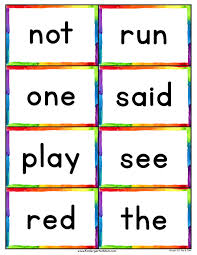
                                                      Flash card for teaching Dolch Words

I learned quite a bit from Elizabeth Brown on a long Twitter discourse. Here are somethings she tweeted and my comments:

Elizabeth Brown @PhonicsMom Replying to @luqmanmichel @ReadSimplified and 2 others

With 100% whole word methods, they used flashcards for everything. Now with balanced literacy, the predictable readers are used for new words, but they also send home hundreds of high frequency sight words to be memorized with flash cards.

Sunday, December 26, 2021

Can Dyslexia Be Artificially Induced in School?


I saw the following link on a Tweet by Faith Borkowsky.

Here are a few extracts any my comments.

Ever since The New Illiterates was published back in 1973, we have known that the chief, and perhaps only cause of dyslexia among school children has been and still is the look-say, whole-word, or sight method of teaching reading. In that book I revealed the fact that the sight method was invented back in the 1830s by the Rev. Thomas H. Gallaudet, the director of the American Asylum at Hartford for the Education of the Deaf and Dumb. He had been using a sight, or whole-word method in teaching the deaf to read, by juxtaposing a word, such as cat, with the picture of a cat. And because the deaf were able to identify many simple words in this way, Gallaudet thought that the method could be adapted for use by normal children.

Thursday, September 23, 2021

The Role of Orthographic Mapping in Learning to Read (Part 1)


The following are extracts from a blog post found here.

Every word has three forms – its sounds (phonemes), its orthography (spelling), and its meaning. Orthographic mapping is the process that all successful readers use to become fluent readers. Through orthographic mapping, students use the oral language processing part of their brain to map (connect) the sounds of words they already know (the phonemes) to the letters in a word (the spellings). They then permanently store the connected sounds and letters of words (along with their meaning) as instantly recognizable words, described as “sight vocabulary” or “sight words”. (Internet)

With orthographic mapping of a word, the letters we see with our eyes and the sounds we hear in that word get processed together as a sight word and are stored together in the brain. This is not the same as memorizing just the way a word looks. It is also important to remember that orthographic mapping is a mental process used to store and remember words. It is not a skill, teaching technique, or activity you can do with students (Kilpatrick, 2019). What can be taught are phonemic awareness and phonics skills which enable orthographic mapping.

Tuesday, December 29, 2020

‘How we remember words…’ (David Kilpatrick)


Today, 29.12.2020, I listened to a YouTube video post by WalshUniversity Literacy Initiative on Dr.Kilpatrick’s talk re: "How We Remember Words, and Why Some Children Don't"

I decided to ask a question as follows and hope to receive a response.

Tuesday, December 22, 2020

Visual memorisation misunderstood


From the discussion I had with a number of teachers on Twitter it is obvious that both a majority of phonics as well as whole language proponents are not aware that we don’t store words visually.

Here are some tweets on visual memorisation between Erin Harrington and me.


Saturday, December 5, 2020

Misleading statements by Pam Kastner and more


The following is a Twitter discussion/debate I witnessed on 23.11.2020.

It started off with Pam Kastner making a sweeping statement. I asked a simple question based on what she had said and she has not responded. (I am told by a good Twitter friend that no one needs to respond to any questions asked. See note below.)

Monday, May 4, 2020

‘Ending the Reading Wars’ Part 3 Frequently used words


This is a continuation of my previous post. Here is an extract from the Report by the three ladies, Kathleen Rastle, Anne Castle, Kate Nation and my comments.


Friday, May 1, 2020

Idiots, Tribes or citizens


"There are three kinds of people in any given society.

This was first identified and supported by the founders of democracy in Ancient Greece.

Wednesday, April 22, 2020

Visual memorising - My Twitter conversation - Part 4 -


Another lady, Pam Kastner @liv2learn joined in with the following tweet.

Apr 13Replying to @1in5advocacy @luqmanmichel and 12 others 


1. English is an alphabetic orthography. It is not logographic. We cannot visually memorize every word in the English language nor should we "teach" any word in that manner. We must use grapheme-phoneme correspondences to orthographically map words storing them as mental...